Reading and Literacy
Our reading and literacy services are for children, teens, and adults who need more than extra practice or homework help. This is therapy, not general tutoring. We look at how a person is hearing sounds in words, recognizing print, and understanding language, and why reading, spelling, or writing feel hard, even when they are trying their best.
Our approach is informed by Orton Gillingham and other structured literacy methods. Skills are taught directly, in small, clear steps, with plenty of guided practice. We combine speech and language expertise with this type of instruction so families and adult learners do not have to choose between “reading help” and “language help.” The goal is for reading and writing to feel clearer, more predictable, and more manageable in everyday life.

Early Literacy and Emerging Readers
Description: Early literacy services support children who are just beginning to notice print, play with sounds, and explore books. This may be helpful if your child has a history of speech or language needs, has a family history of dyslexia, or seems to need extra support before or during the first years of school.
Treatment may focus on building sound awareness, letter-sound knowledge, early vocabulary, and a positive relationship with books and stories.
Word Reading, Spelling, and Fluency
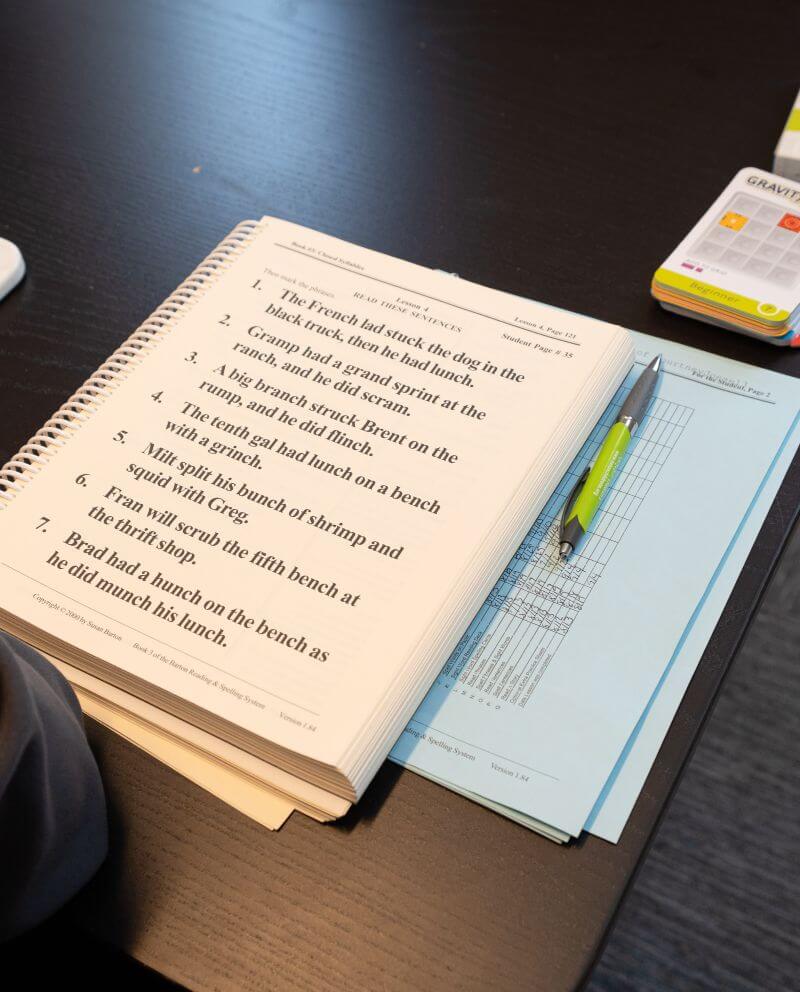
Description: Word reading, spelling, and fluency services support children, teens, and adults who get stuck on words, read very slowly, or struggle to remember how to spell, including learners with or at risk for dyslexia. It may be a good fit if reading feels effortful, is often avoided, or if spelling and written work are stressful even with extra practice.
We teach word reading and spelling in small, clear steps using an approach informed by Orton Gillingham and other structured literacy methods. This includes connecting sounds and letters, noticing patterns, and building automatic word reading so fluency can grow. The goal is for reading and spelling to feel more accurate, efficient, and predictable in everyday life.

Reading Comprehension
Reading comprehension services helps when a person has trouble understanding, remembering, or talking about what they read. This can show up as difficulty following directions, keeping track of information in stories or articles, or learning from textbooks, emails, or online materials.
Support may include building background knowledge, vocabulary, sentence understanding, and awareness of story or text structure. We connect these skills to real tasks at school, college, work, and home so reading feels more useful and less overwhelming in daily life.

Written Expression
Written expression services support children, teens, and adults who have ideas but struggle to get them onto the page or screen. This may look like difficulty starting writing tasks, organizing thoughts, forming sentences and paragraphs, or keeping up with written work for school, college, or a job.
Therapy may focus on planning and organizing ideas, building clear sentences and paragraphs, using grammar and punctuation in a functional way, and trying tools that make writing more efficient. The goal is to reduce frustration and help people share their thinking in writing in ways that feel more doable and sustainable.
What to expect
We begin with a conversation and evaluation to learn how your child, teen, or you as an adult are reading, spelling, and understanding written language. Together, we create a clear plan. Reading and spelling grow with frequent, repeated practice. Most learners need at least two sessions per week, and steady attendance is important for progress. In sessions, we use a step by step, research backed approach and show you simple ways to support practice at home so gains in therapy carry over to school, work, and daily life.
- How we teach:
- Our reading and spelling intervention follows a structured literacy approach informed by Orton Gillingham. Skills are taught directly, in a clear sequence, with frequent review so each new step has a solid foundation underneath it. We use multisensory methods, consistent routines, and plenty of guided practice. Throughout, we respect each learner’s strengths, interests, and identity as a reader and writer, not just their challenges.
- Evaluation and Collaboration
- Whenever possible, we prefer that children, teens, and adults receiving reading and writing services have had, or are in the process of getting, a comprehensive evaluation with a psychologist or neuropsychologist. This type of testing helps everyone see the full picture, including attention, learning, and other factors that can affect reading and writing. When teams only see part of the picture, important needs can be missed or misunderstood.
For some learners, our clinic is the first place concerns are explored. In those situations, we begin with a speech, language, and literacy evaluation and look closely at reading, spelling, and written expression. We talk openly about where our testing fits in and when additional evaluation might be helpful. If patterns suggest that more is going on than a reading skill difference alone, we will explain why a referral for comprehensive testing could add important information, while still moving forward with appropriate therapy and adjusting the plan as new information becomes available.